
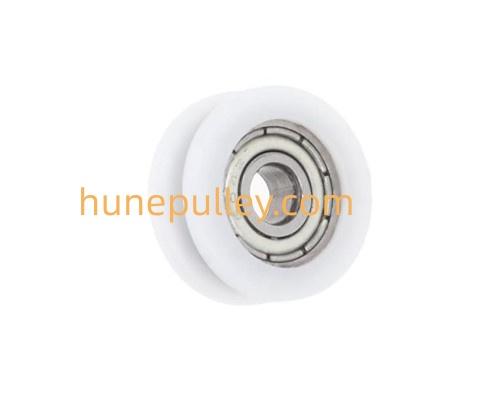
When working on mechanical projects, selecting the right Hune Pom Pulley can make a noticeable difference in overall system movement and stability. Many engineers, equipment builders, and DIY creators pay attention to motors and frames but sometimes overlook the importance of small rotating components. In reality, the choice of pulley structure influences how belts travel, how smoothly motion transfers, and how quietly equipment operates during daily use.
The Role of Pulley Selection in Mechanical Design
Every mechanical system contains parts that guide motion from one point to another. Pulleys are responsible for maintaining alignment between belts or cables while reducing unnecessary friction. When the structure fits the design correctly, movement becomes balanced and predictable.
Designers usually consider several practical aspects before choosing a component:
installation space
rotational movement
surrounding environment
connection compatibility
Ignoring these factors can lead to vibration, uneven belt wear, or unstable operation. Careful selection helps avoid unnecessary adjustments later.
Material Influence on Daily Operation
Material structure often determines how smoothly a pulley works within a system. Many modern designs use engineering plastics because they combine strength with lightweight properties. These materials also help reduce operational noise, which becomes valuable in indoor equipment or automated environments.
Another advantage of engineered polymer material lies in its ability to maintain stable movement without requiring complicated maintenance routines. When installed correctly, the wheel can support continuous operation while maintaining consistent motion control.
Design Details That Make a Difference
Small structural variations can change the way a pulley performs. Groove depth, outer diameter, and hub shape all influence belt contact and rotational stability.
A few design characteristics worth reviewing include:
Groove profile
Guides belts along a steady path and reduces slipping during movement.
Wheel diameter
Determines the balance between rotational speed and torque transmission.
Hub alignment
Helps maintain proper positioning between connected components.
These design considerations may appear minor at first glance, yet they strongly affect how smoothly a machine functions during daily operation.
Installation Awareness for Long Term Use
Even a well designed pulley requires correct installation. Alignment is particularly important. When a belt travels through an angled path, the wheel may experience uneven pressure, which can gradually affect movement.
To avoid this situation, installers often focus on several practical habits:
ensuring parallel belt paths
checking mounting stability
keeping surfaces clean during assembly
Simple preparation steps can significantly improve operational consistency.
Applications Across Many Mechanical Environments
Rotating wheels used for belt guidance appear in a wide range of mechanical equipment. They support movement transfer in both compact devices and larger industrial assemblies.
Typical application environments include:
automated conveyor mechanisms
household equipment movement systems
sliding structures inside cabinets or doors
experimental mechanical projects
Each environment requires components that support stable motion while remaining easy to integrate within existing structures.
Practical Thinking Before Final Selection
Choosing a pulley should never rely on appearance alone. Designers often review the overall system layout first. Space limitations, mounting direction, and belt type all influence compatibility.
The second appearance of the keyword also belongs here naturally.
Choosing the correct Pom Pulley often becomes easier when engineers evaluate the entire motion system instead of focusing on a single component. Looking at the full structure helps ensure that rotation, alignment, and durability remain balanced during operation.
Considering Manufacturing Experience
When sourcing mechanical components, manufacturers with consistent production experience can provide parts designed for practical application needs. Careful processing, stable material selection, and attention to structural detail all influence how smoothly rotating components perform inside equipment.
Hunepulley focuses on pulley related components designed for various mechanical structures. Their catalog includes multiple configurations intended to support smooth motion in different types of equipment. If you are exploring pulley solutions for mechanical assemblies, visiting Hunepulley may provide useful references for selecting components suited to your project design.

 English
 Arabic
 French
 Spanish
 Deutsch
 Turkish
 Dutch
Dutch
 Italiano
 Russian
 Romaian
 Portuguese (Brazil)
 Greek
Greek